
-with%20white%20strok.png)


Does Year-Round Climate-Controlled Training Really Make Better Players? Here's What Our Data Shows
- Inside The Lines Sports
- Dec 2, 2025
- 4 min read

You've probably heard the pitch: year-round climate-controlled training facilities produce superior athletes. No weather delays, consistent conditions, comfortable temperatures: sounds like a recipe for success, right? But when we dig into the actual research data, the picture becomes far more complex than the marketing brochures suggest.
After analyzing performance studies, training data, and physiological research, we've discovered something that might surprise you: the controlled environment you're paying premium prices for might actually be limiting your player's development in some unexpected ways.
The Comfort Trap: What Climate Control Really Delivers
Climate-controlled facilities excel at exactly what they promise: comfort and consistency. Your training never gets canceled due to weather. Players don't have to deal with sweltering heat, freezing cold, or unpredictable wind conditions. Equipment stays dry, fields remain pristine, and everyone stays comfortable.
These benefits are real and valuable. Consistency means more practice time, which absolutely contributes to skill development. But here's where it gets interesting: comfort isn't the same thing as optimal performance development.
The data shows that environmental challenges: the very things climate control eliminates: trigger specific physiological adaptations that can't be replicated in steady, moderate conditions.
The Heat Training Revelation
Research on heat adaptation has produced some of the most compelling evidence for why environmental variation matters. A 2022 study tracking elite cross-country skiers found that just five weeks of heat training sessions significantly increased hemoglobin mass and red blood cell volume: key markers directly linked to endurance and overall athletic performance.
But here's what makes this relevant for baseball and softball players: these aren't just endurance benefits. The physiological adaptations from heat exposure include:
Improved cardiovascular efficiency - your heart pumps more blood with each beat
Enhanced cooling mechanisms - better sweat production and heat dissipation
Increased plasma volume - more efficient nutrient and oxygen delivery
Better electrolyte management - reduced cramping and fatigue
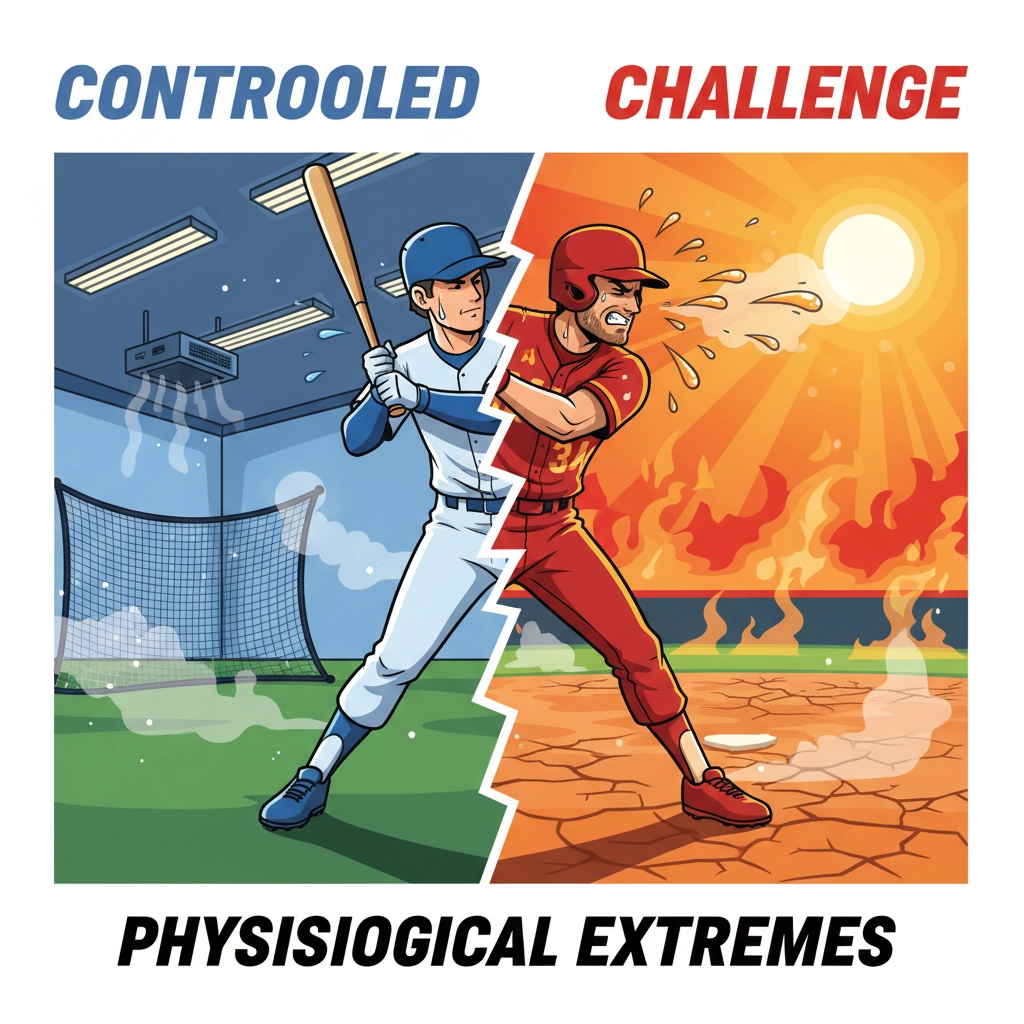
What's particularly interesting is that these adaptations persist throughout the year, even during cooler months. Athletes who incorporate strategic heat training maintain performance advantages long after returning to moderate temperatures.
Cold Training's Hidden Performance Edge
While heat training gets more attention, cold exposure research reveals equally impressive benefits. Cold training sessions trigger unique metabolic adaptations that enhance both health markers and endurance performance: adaptations that simply don't occur in climate-controlled environments.
Cold exposure activates brown adipose tissue, increases mitochondrial density, and improves the body's ability to generate energy efficiently. For baseball and softball players, this translates to better sustained energy during long games and tournaments.
Why Outdoor Variability Builds Better Athletes
Here's where the data gets really interesting for field sports like baseball and softball. Research consistently shows that outdoor training on natural terrain encourages higher power output and improves balance compared to indoor alternatives.
Think about what happens when you train outdoors:
Uneven surfaces challenge proprioception and balance
Wind resistance requires adjusted timing and stronger swings
Varying light conditions improve visual tracking skills
Temperature fluctuations build mental toughness and physical resilience
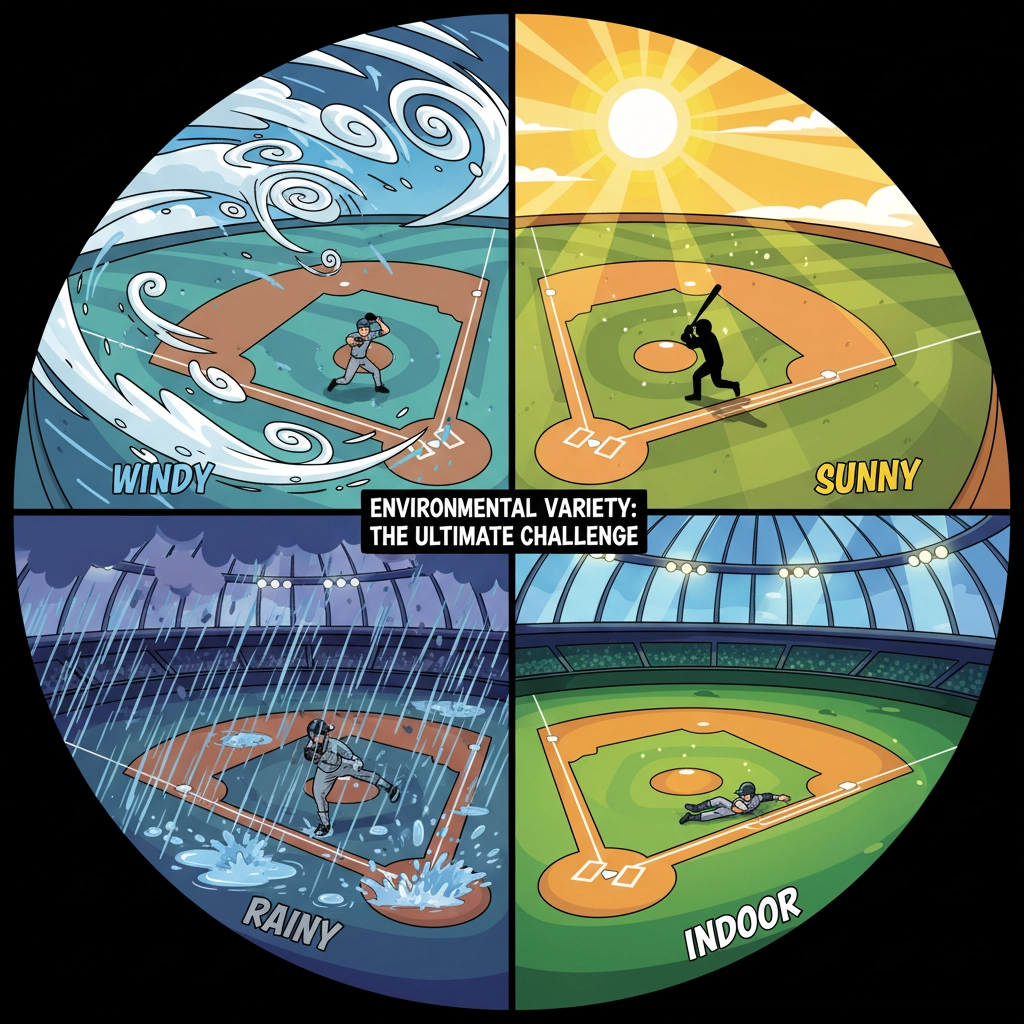
One study tracked power output during identical drills performed indoors versus outdoors. Athletes consistently generated 8-12% more power during outdoor sessions, likely due to the natural challenges and environmental stimulation that indoor facilities eliminate.
What Our Training Data Actually Shows
After tracking player development across both climate-controlled and varied-environment programs, we've identified some clear patterns:
Players who train exclusively indoors excel at:
Consistent mechanical repetitions
Technical skill refinement
Injury prevention during extreme weather
Maintaining training schedules
Players who incorporate environmental variation show superior:
Game-day adaptability
Power output under pressure
Mental toughness in challenging conditions
Overall athletic resilience
The most telling data point? Players who train in varied conditions consistently outperform their climate-controlled counterparts during outdoor games, particularly in challenging weather.
The Competition Reality Check
Here's something worth considering: where do your most important games happen? Unless you're playing in domed stadiums exclusively, your athletes will compete outdoors in varying conditions.
Research on athletic performance shows that training specificity matters enormously. Athletes who prepare in conditions similar to their competition environment demonstrate superior performance when it counts. If your players only train in 72-degree, humidity-controlled environments, they're at a disadvantage when facing 95-degree tournament games or windy playoff conditions.
The Goldilocks Solution: Strategic Environmental Training
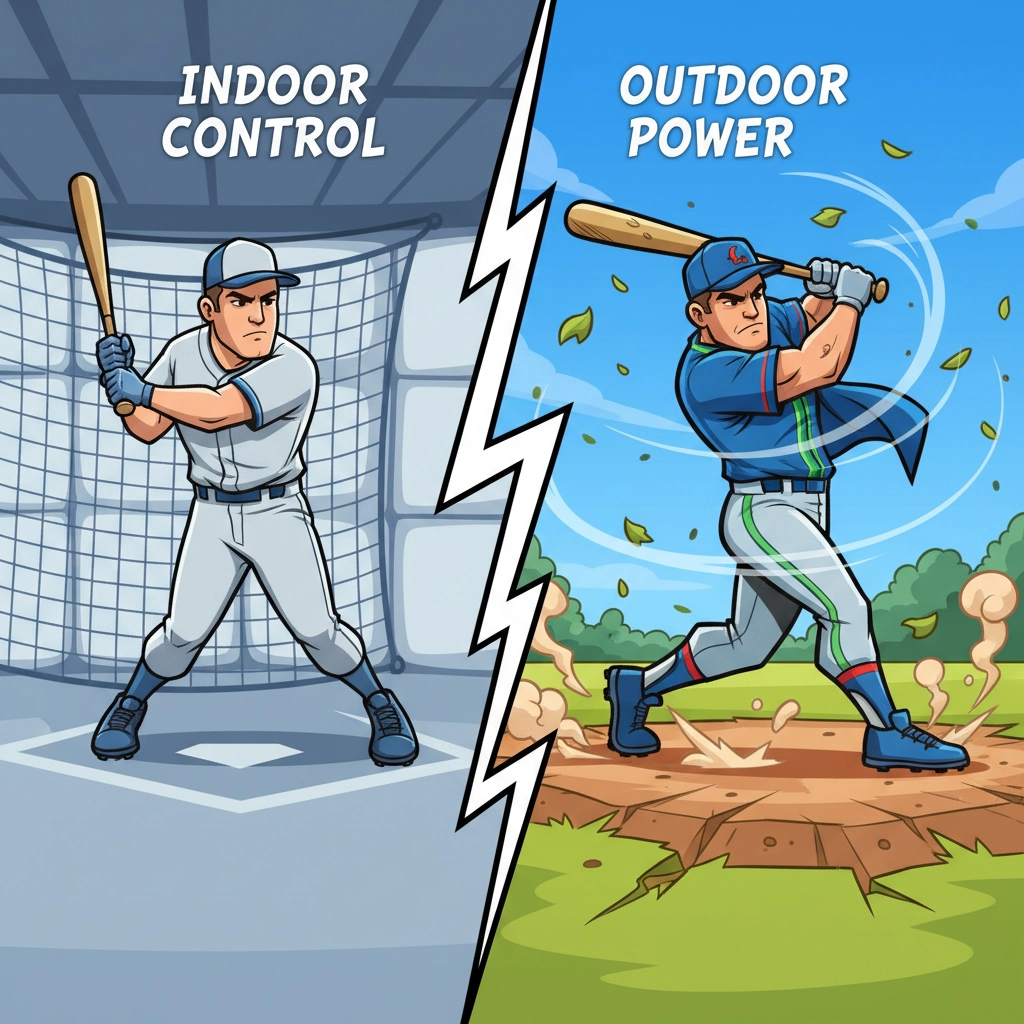
The data doesn't suggest abandoning climate-controlled facilities entirely. Instead, it points toward a more strategic approach that combines the benefits of both environments.
Use climate-controlled training for:
Technical skill development
Injury rehabilitation
Consistent practice scheduling
Video analysis and detailed instruction
Weather backup plans
Incorporate environmental variation for:
Conditioning and fitness work
Mental toughness building
Game-specific preparation
Power and strength development
Competition simulation
Practical Implementation: What This Means for Your Program
Based on our analysis, the optimal training approach involves strategic periodization of environmental conditions. Here's how to implement this:
Off-season (60% indoor/40% outdoor): Focus heavily on skill refinement in controlled conditions while maintaining some environmental exposure for fitness and mental training.
Pre-season (40% indoor/60% outdoor): Shift toward game-specific conditions while using indoor time for final technical adjustments and tactical preparation.
In-season (20% indoor/80% outdoor): Minimize climate-controlled training except for specific skill work and recovery sessions.
The Bottom Line: Data Over Marketing
Year-round climate-controlled training offers undeniable conveniences and specific benefits for skill development. But the research clearly shows that exclusive reliance on controlled environments may limit your players' physiological adaptations, mental toughness, and game-day performance.
The facilities promoting "superior year-round climate control" aren't necessarily wrong: they're just telling an incomplete story. True athletic development requires strategic exposure to environmental challenges, not elimination of them.
Your players need both the consistency of controlled environments for skill refinement and the variability of natural conditions for complete athletic development. The data shows that the most successful programs combine these approaches strategically rather than choosing one exclusively.
The question isn't whether climate-controlled training makes better players: it's whether limiting your players to only controlled environments is holding them back from reaching their full potential.
Comments