
-with%20white%20strok.png)


Why Movement Efficiency Will Change the Way You Chase Velocity

You’ve seen the radar gun. You’ve felt that burning desire to see a higher number flash across the screen. Whether you are a pitcher looking for that extra heater or a position player trying to gun down a runner from the deep hole, velocity feels like the ultimate currency in sports. But here is the truth that many training programs won't tell you: chasing velocity through sheer effort alone is a trap.
If you are grinding every day, throwing weighted balls until your arm feels like lead, and hitting the gym with a "max effort" mentality but seeing your gains plateau: or worse, your arm health decline: you aren't short on effort. You are short on movement efficiency.
At Inside The Lines Sports, we believe velocity isn't something you "force." It is a byproduct of how well your body moves. When you stop chasing the number and start chasing efficiency, everything changes. Your ceiling rises, your recovery time drops, and your career longevity skyrockets.
The Myth of "Borrowed" Velocity
It’s easy to get sucked into the latest "get-velo-fast" gimmicks. You’ve probably seen the six-week protocols that promise a 5-mph jump. Good news? They often work... for a month. But what happens in week seven?
Research shows that aggressive, max-effort-only training often leads to "borrowed performance." Your body produces a spike in velocity, but because the movement isn't efficient, your nervous system eventually hits the panic button. To protect your joints and tissues from stress they aren't prepared for, your brain throttles your output. Suddenly, your velocity drops, your command disappears, and your recovery goes from 24 hours to four days.
Instead of borrowing velocity, we want you to own it. That starts with understanding the kinematic sequence.
Understanding the Kinematic Sequence
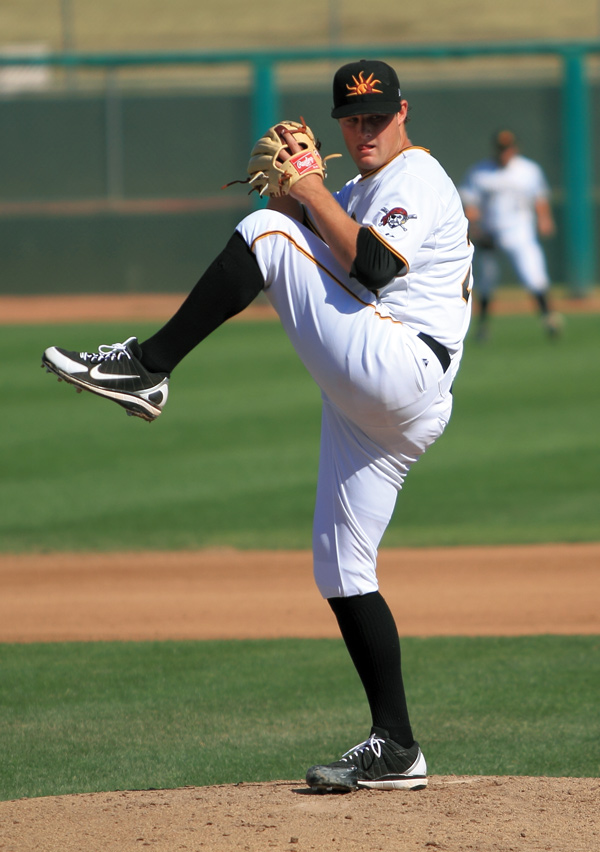
Think of your body like a whip. A whip doesn't move fast because the person holding it is "stronger"; it moves fast because energy travels perfectly from the handle to the tip. In sports, this is the kinematic sequence: the precise order in which your body parts accelerate and decelerate to transfer energy from the ground into the ball.
The Foundation (Lower Body): It starts with your feet and legs. If you aren't efficient at creating force from the ground, you are already playing catch-up.
The Pivot (Hips): Your hips must rotate with power and timing.
The Core (Torso): Energy moves from the hips to the torso.
The Delivery (Arm): Finally, the arm acts as the "whip" that delivers all that built-up energy.
When this sequence is efficient, velocity feels effortless. When it’s broken, you have to "muscle" the ball, which leads to fatigue and injury. If you want to see how we break this down in person, check out our classes and clinics.
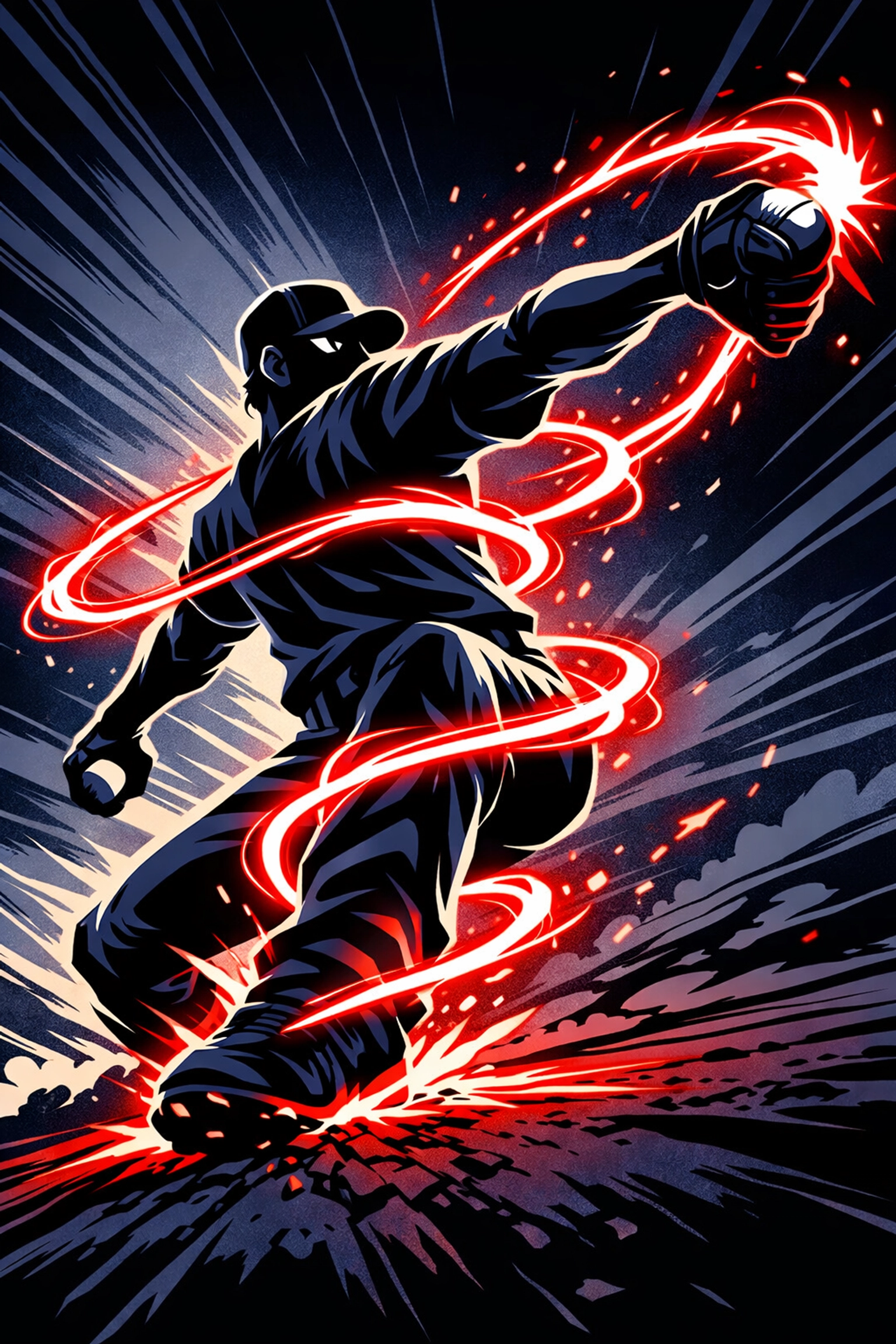
Image prompt: A bold, high-contrast energetic cartoon illustration of an athlete in mid-motion, with bright glowing lines tracing the "kinetic chain" from the feet, through the hips, to the hand, symbolizing perfect energy transfer.
The 4 Pillars of High-Performance Movement
At Inside The Lines Sports, we don't believe in one-size-fits-all drills. We look at you as a complete individual. To achieve sustainable movement efficiency, we focus on four key areas of performance.
1. Mechanics: Creating Individuals, Not Robots
We aren't interested in making every athlete look exactly the same. Everyone has a different build, different limb lengths, and different natural rhythms. Our goal is to build sound individuals. We focus on the core principles of movement: like proper hinge patterns and lead-leg block: rather than forcing you into a "cookie-cutter" delivery.
Avoid the gimmicky drills that look cool on Instagram but don't translate to the mound. True mechanical improvement comes from understanding how your body moves through space. Our instructors, including Andy and Nolan, work with you to find your most efficient path.
2. Strength Training: Building the Braking System
Most athletes think strength training is just about how much they can squat or bench. But maximum strength doesn't always correlate with throwing velocity. In fact, throwing is a high-speed, low-resistance movement.
To be efficient, you need a powerful braking system.
Eccentric Training: Focuses on the lengthening phase of a muscle, helping you store elastic energy.
Isometric Training: Builds joint stabilization and co-contraction. If your body doesn't know how to "stop" or stabilize itself, it won't allow you to "start" or accelerate at max speeds. Your nervous system is smart; it won't let you drive at 100 mph if it knows your brakes are broken.
3. Mental & Emotional: Movement Literacy
Have you ever felt "disconnected" on the mound? That's a lack of movement literacy. This is your ability to feel, adapt, and organize your body in real time. Under the pressure of a game, things will go wrong. You might be tired, or the mound might be slick.
An efficient athlete can make micro-adjustments on the fly without losing velocity. We train the mental side so you stay focused on the process of the movement, not just the outcome of the pitch. When you trust your preparation, the "velocity" becomes a byproduct of your confidence.
4. Nutrition: Fueling the Engine
You can have the most efficient car in the world, but if you put cheap fuel in it, it won't perform. Movement efficiency requires high-functioning muscles and a responsive nervous system. This means your nutrition and hydration must be on point. Recovery is just as important as the workout itself. If you aren't fueling your body to repair tissue stress, your movement efficiency will degrade over the course of a season.
Tip: Start tracking your "Rate of Perceived Exertion" (RPE) for your throwing sessions. If your velocity is staying the same but your effort feels higher, it's a sign your efficiency is dropping!
Why Efficiency Wins Every Time
So, what happens when you prioritize efficiency over sheer force?
Sustainability: You won't see the mid-season "velocity dip."
Command: Better movement organization naturally leads to more consistent release points.
Recovery: When your body isn't fighting itself to generate speed, you bounce back faster.
What can members do to get started? Stop looking for the "magic drill." Instead, start looking at how your body moves as a whole system. Are your hips opening too early? Is your lead leg soft? Are you leaking energy at the torso?

Image prompt: A high-contrast, sporty cartoon of an athlete's brain glowing with energy, connected by electrical pulses to their muscles, representing "Movement Literacy" and the mind-body connection.
Take the Next Step
Chasing velocity is a journey, not a sprint. It’s about building a foundation that lasts a lifetime. Whether you are looking for rentals to get your work in or you want to join one of our camps, we are here to help you navigate this process.
Velocity is the reward for moving well. When you master your mechanics, strengthen your braking systems, sharpen your mind, and fuel your body, the radar gun will take care of itself.
Are you ready to stop forcing it and start flowing?
Join the movement. Let’s build something that lasts.
If you have questions about our philosophy or want to see our facility in action, feel free to contact us. We’re excited to help you reach your full potential( Inside The Lines.)
Comments